 Our Dermatologists
 Our Providers
 Our Staff
 Specials
 Financing
 Pay Bill Online
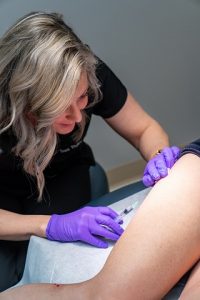 Sclerotherapy is a minimally-invasive procedure that treats spider veins and varicose veins. Depending on how deep the abnormal vein is under your skin, your doctor may need to use ultrasound technology to see where the vein is located. Then, he or she will inject a specialized solution directly into the target vein. This solution is usually saline-based, but the chemical agent depends on the size of the vessel that needs to be treated.
Injecting the saline solution into a vein damages the inside lining of the vessel. This forms a clot that blocks circulation in the vein. This forces the body to reroute blood flow through healthier veins. The damaged vein will eventually become scar tissue and the body will reabsorb it under the skin. This absorption causes the vein to fade from view, effectively removing varicose veins.
Sclerotherapy does require an injection into the skin, so the patient may experience some stinging or cramps when the syringe is inserted. Also, some feel pain from the saline solution being injected into the vein. The procedure should be otherwise pain-free unless a rare difficulty occurs. All medical procedures pose a risk, but your doctor will discuss side effects before deciding if this therapy will work for you. For example, a person may experience hyperpigmentation (darkening of the skin), pain at injection site, temporary swelling, or an allergic reaction. In severe cases, a person may experience nerve damage.
Sclerotherapy is performed on an outpatient basis; therefore, patients do not require hospitalization. Following the treatment, the patient will need to wear compression dressings for up to three weeks. A follow-up appointment after this recovery time will determine if further action is necessary. After treatment, veins will fade within a few weeks. On rare occasions, it may take more than a month to see total results. More than one treatment may be necessary for larger veins.
Before/After Gallery
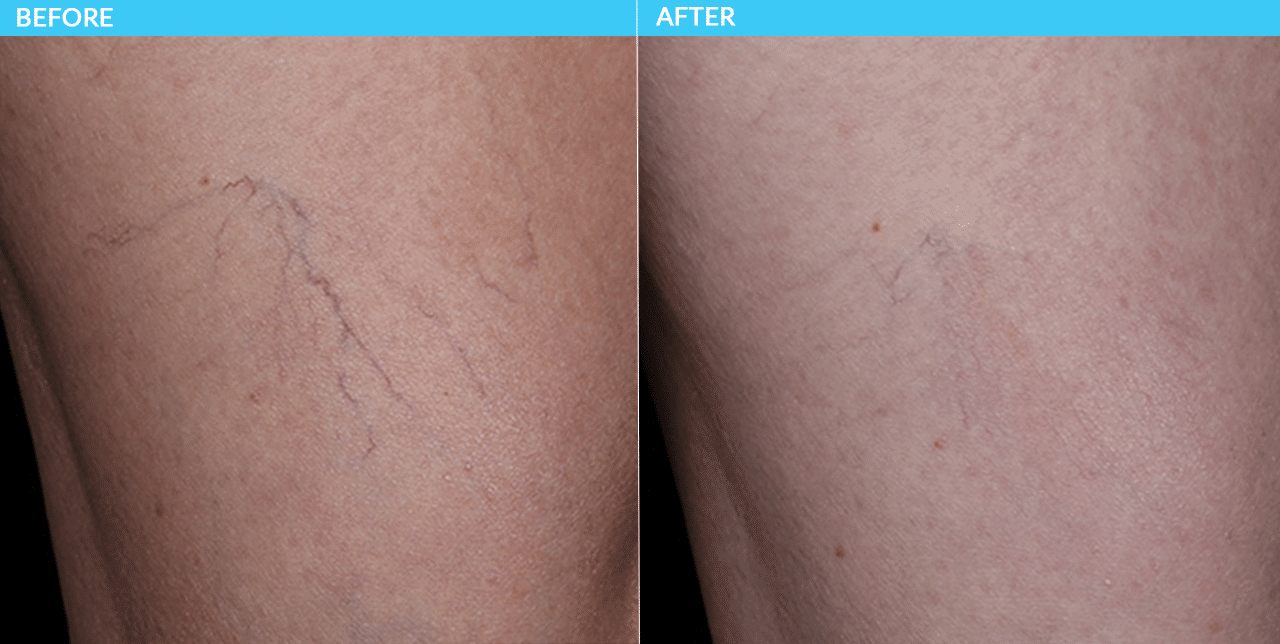
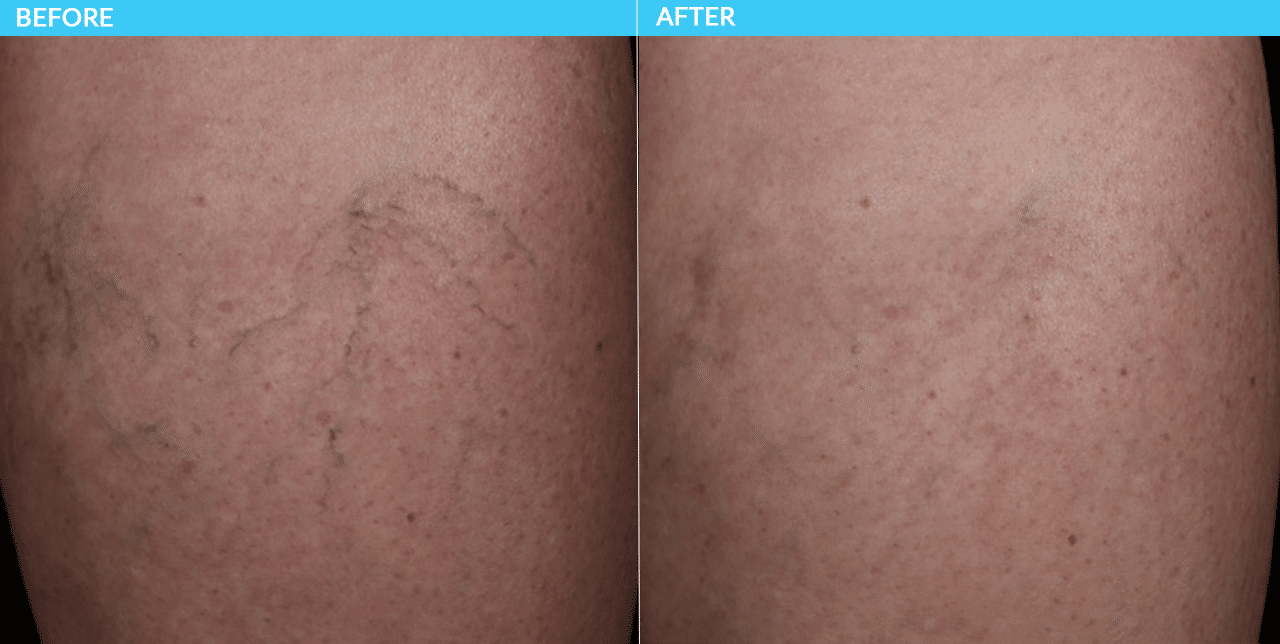
Sclerotherapy FAQ
Choosing treatment for spider or varicose veins often comes with questions. At Universal Dermatology & Vein Care, our experienced providers take the time to explain your treatment options, what to expect during recovery, and the results you can achieve. Below are answers to some of the most common questions we hear about sclerotherapy.
Sclerotherapy is a minimally invasive treatment for spider veins and small varicose veins. During the procedure, your provider injects a specialized solution into the affected vein, causing it to collapse and gradually be absorbed by your body. Blood naturally reroutes through healthier veins, improving both the appearance of your legs and, in some cases, symptoms like aching or heaviness.
Most patients experience very little discomfort during sclerotherapy. The procedure uses extremely fine needles, so anesthesia typically isn’t necessary. You may feel a brief pinching, mild burning, or slight cramping that lasts only a few seconds.
Sclerotherapy is highly effective for treating spider veins, reticular veins (the blue or green veins beneath the skin), and many small to medium-sized varicose veins. If you have larger varicose veins, your provider will recommend the treatment option that’s best suited to your condition.
You may be a good candidate if you have spider veins or small varicose veins, experience leg aching, burning, or heaviness, are in good overall health, and want a non-surgical treatment with minimal downtime. During your consultation, the providers at Universal Dermatology & Vein Care will determine whether sclerotherapy is the right solution for you.
Most sclerotherapy appointments take about 30 to 45 minutes, depending on the number and size of the veins being treated. Because there’s little downtime, most patients return to work or their normal routine the same day.
The number of treatments depends on how many veins are being treated and their size. Many patients achieve excellent results in one to three sessions, while larger treatment areas may require additional visits to achieve the desired outcome.
Many spider veins begin fading within three to six weeks after treatment. Larger veins may take several months to fully improve as your body naturally absorbs the treated vessels. Your provider will discuss what you can expect based on your individual treatment plan.
Yes. Most patients are asked to wear compression stockings for several days or longer after treatment. Compression helps improve circulation, minimize swelling, support healing, and optimize your treatment results.
A vein successfully treated with sclerotherapy typically does not return. However, new spider veins or varicose veins can develop over time due to factors such as genetics, aging, pregnancy, hormonal changes, or occupations that require prolonged standing. Periodic maintenance treatments may help keep your legs looking their best.
Recovery is usually quick and straightforward. Most patients resume normal daily activities immediately after treatment. Your provider may recommend temporarily avoiding strenuous exercise, hot tubs, saunas, prolonged sun exposure, and extended periods of standing while your veins heal.
Temporary side effects can include mild bruising, redness, tenderness, swelling, or slight skin discoloration around the treated veins. These effects typically resolve on their own as the area heals. Before your procedure, your provider will review the expected recovery process, potential risks, and aftercare instructions.